Posts

Ten Passaic-class Monitors That Were Built During the American Civil War
Image
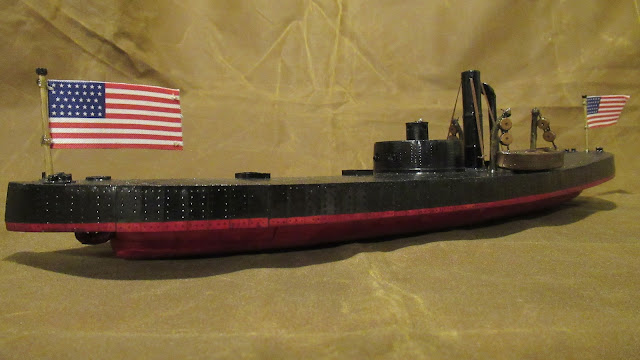
William Conant Church, on page 5 of the second volume of  The Life of John Ericsson , claims that a new class of ironclad emerged after the Battle of Hampton Roads. On the 14th of April, 1862, Commodore Joseph Smith is reported to have acknowledged that John Ericsson had been authorized to construct a class of six new monitors. A verbal agreement, which is claimed to have been made between John Ericsson and Navy Department of the United States of America, is reported to have preceded the written contract which permitted the Swedish inventor to build the latest generation of monitors. It is claimed, on page 21, that a total of ten monitors of the   Passaic -class were built during the American Civil War.   Passaic -class monitors, which are described in the first volume of the second series of   Official Records of the Union and Confederate Navies in the War of the Rebellion , are reported to have been built by a variety of shipyards that were situated throughout the ...

Canals, Navigable Rivers and Commercial Ports That Were Accessible to Humber Sloops.

Image
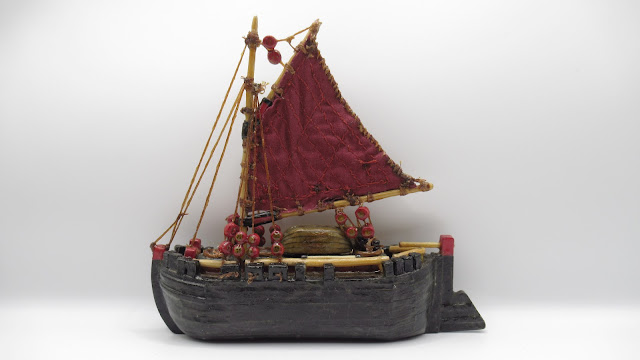
Humber sloop, a sailing barge of Lincolnshire and Yorkshire, seen from the starboard side.  Humber sloops were merchant vessels that traded along the inland waterways of Yorkshire, Lincolnshire, Derbyshire and Nottinghamshire as well as the East Coast of England. These flat-bottomed barges, able to beach on the sandbanks and mudflats at low tide, were designed to operate in the shallow waters of the Humber Estuary as well as the tidal sections of its tributaries. A typical sloop was equipped with a single mast, a triangular headsail, a quadrilateral mainsail, a pair of leeboards and a stern-mounted rudder that was steered by a tiller. Advances in metallurgy, occurring during the late eighteenth and early nineteenth centuries, made it possible to construct these vessels from iron while steel became the favoured building material at the turn of the twentieth century. Anti-fouling paint, containing toxic biocides such as black copper(II) oxide or red lead(II,IV) oxide, was used to dis...

Known Trades of Jigger Flats

Image
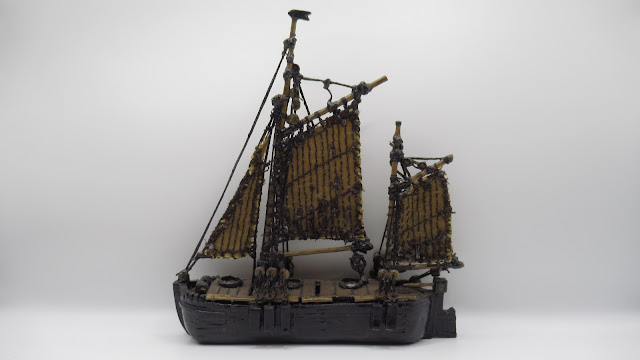
Ketch-rigged sailing barges, known in Cheshire and Lancashire as jigger flats, were built along the banks of the River Mersey from the late nineteenth century until the early twentieth century. The mizzenmast, shorter than the mainmast, was also known as a jigger mast and this may explain from where these trading barges got their name. These merchant vessels, a variation of the Mersey flat, were owned by businesses such as the Liverpool Lighterage Company and the United Alkali Company. A distinction arose between the mastless cut flats, or dumb barges, that did not leave the inland waterways and the sailing flats which were seagoing vessels. Sailing flats, including the ketch-rigged variety, could be towed along canals and rivers by horses or barge haulers but their rigging allowed them to operate in open waters. Jigger flats were built for coastal trade and made frequent voyages into the Bay of Liverpool, Dee Estuary and Irish Sea while their dimensions allowed them to navigate the in...

The Mersey Flat's Role in the Coal Trade

Image
Mersey flats transported coal, that was extracted from pits in Cheshire and Lancashire, along the navigable waterways of North West England. It was cheaper to transport coal along the water than by land but the tributaries of the River Mersey, at the turn of the eighteenth-century, were difficult to navigate. In 1720, however, Royal Assent was given to two Acts of Parliament that allowed the River Weaver and the River Irwell to be made navigable to trading vessels. Coal flats, from the time that the first river navigations were constructed, were able to supply the salt works of Cheshire as well as the home fires of Manchester with fossil fuels. Liverpool, the principle trading port of North West England, received a sizeable portion of the coal that was conveyed along the inland waterways. The first river navigations were built in the pre-industrial era, when agricultural produce and artisanal wares were the principle trading commodities, but the establishment of these water lines of co...